
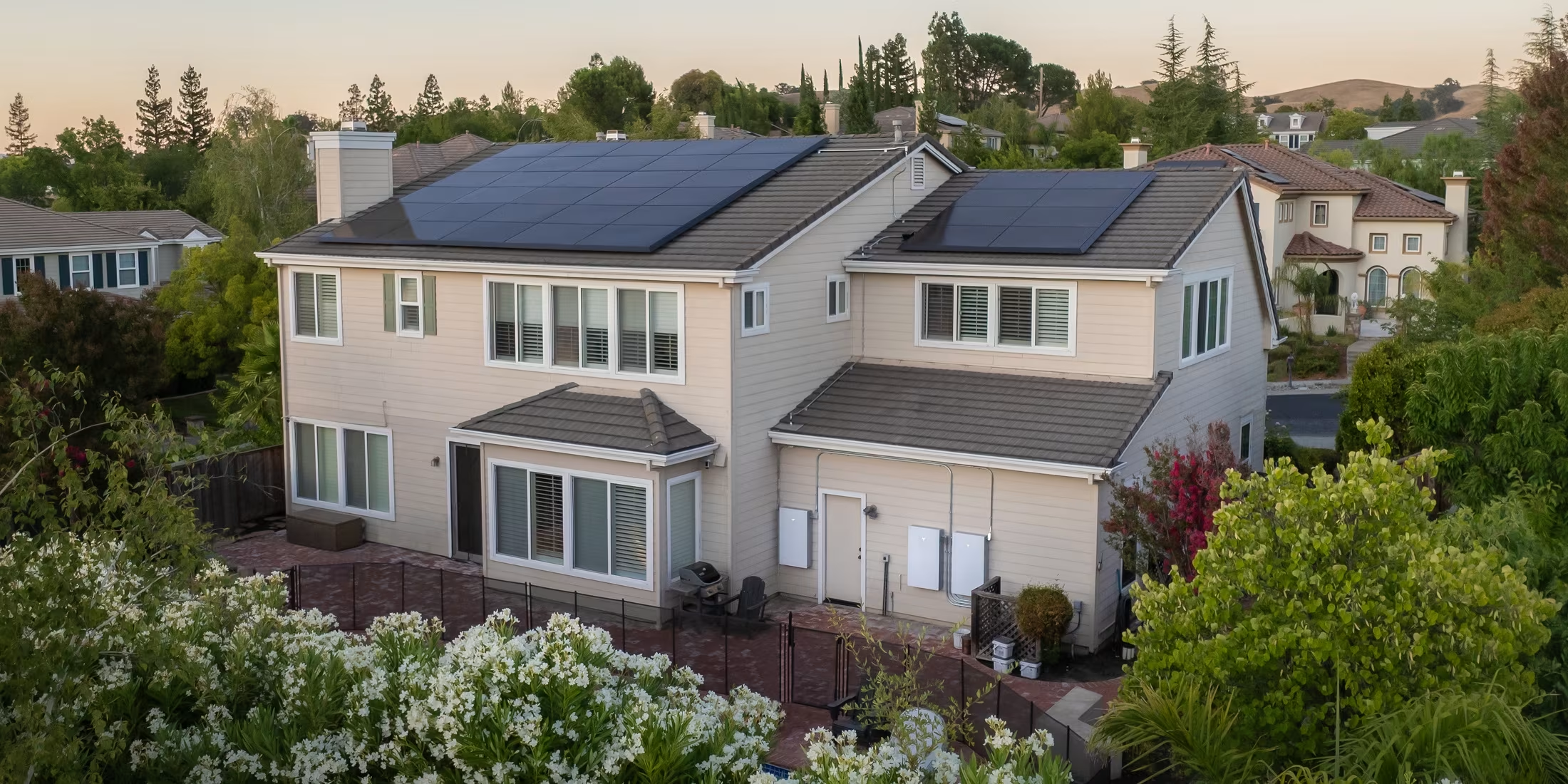
Solar Panels · Fort Myers, FL
In Fort Myers, the roof decides before the array does.
Rooftop solar design and installation across Lee County by PrimeBid Energy LLC, Tesla Premier Certified Installer.
Certified
Tesla Premier Certified Installer
Also licensed for the roof
Florida State Certified Roofing Contractor CCC1334360
Electrical
Florida State Certified Electrical Contractor EC13012706239
Local
Southwest Florida based, serving Fort Myers and Lee County
Panels mount on top of a roof and are meant to run for decades. If the roof underneath has a few years left, they come off and go back on to replace it, and that cost is rarely in the original quote. We start with the remaining life of your roof and tell you plainly if the answer is to wait.
Recent work
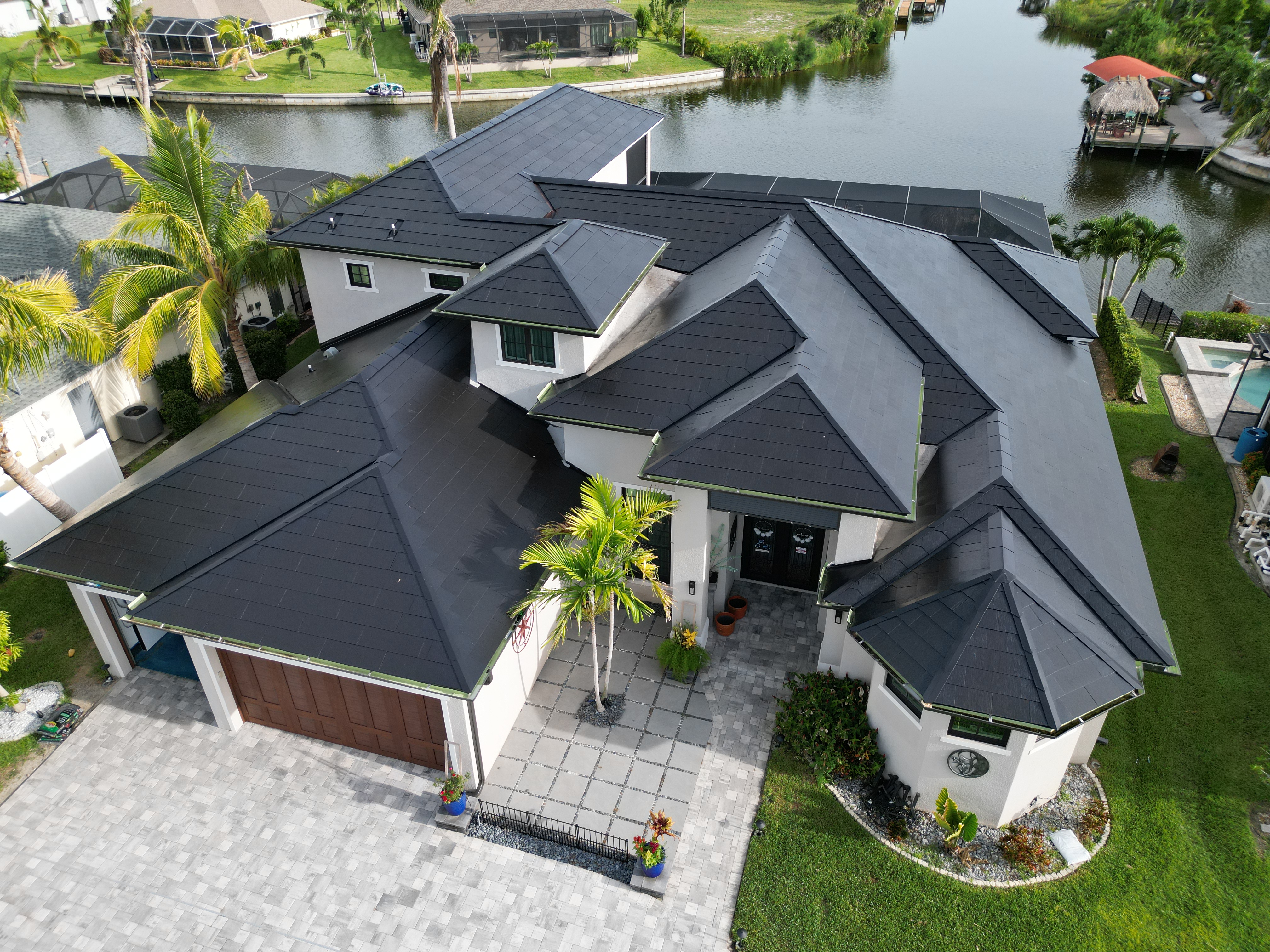
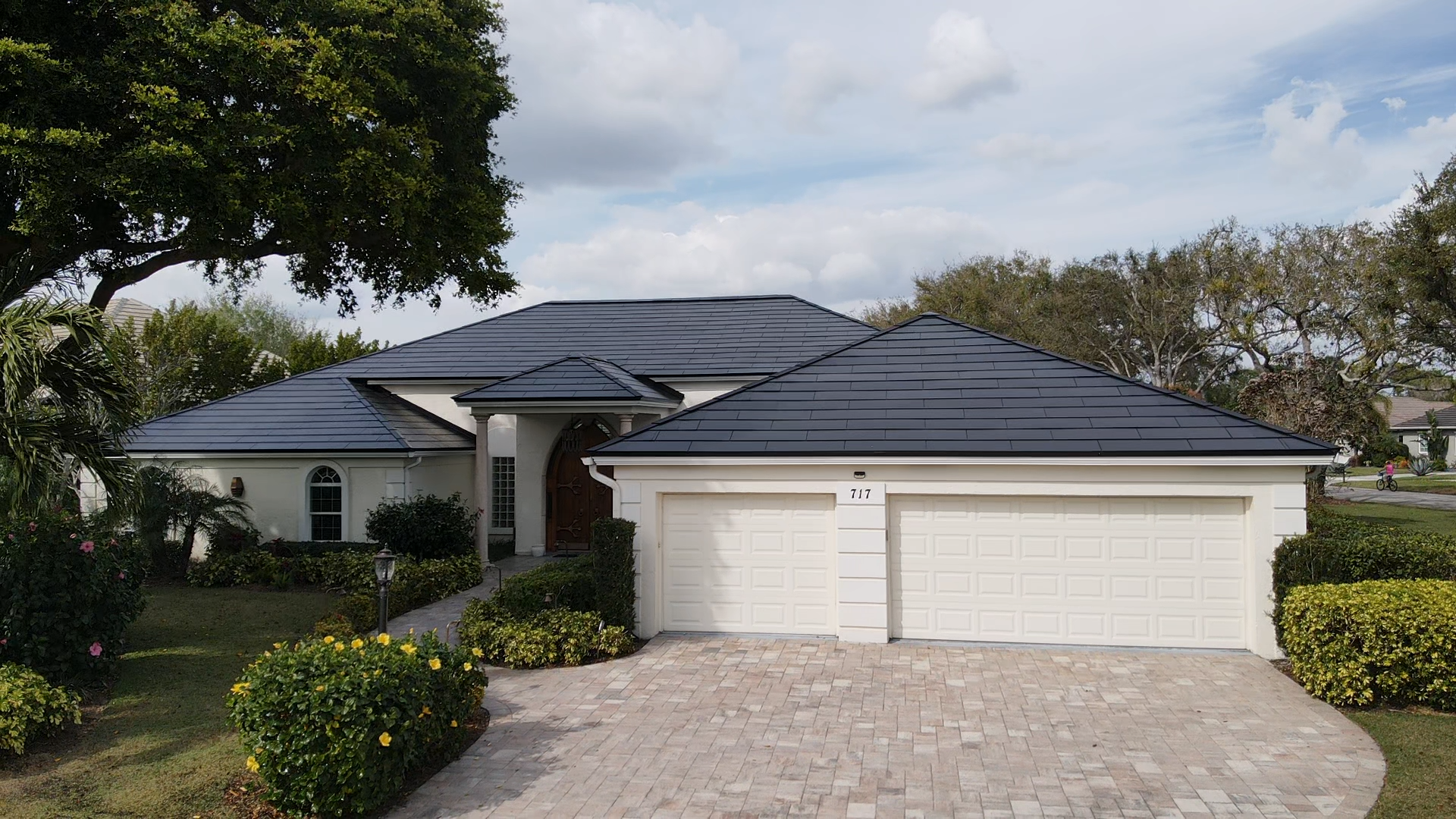
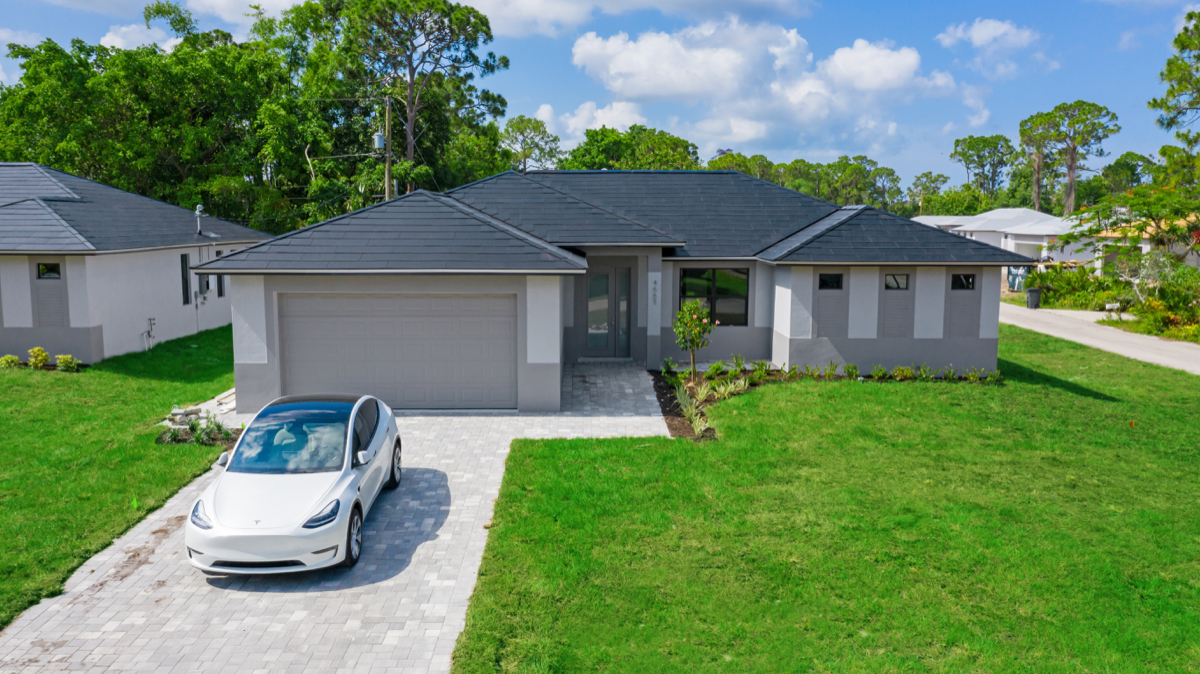
Our solar work across Southwest Florida
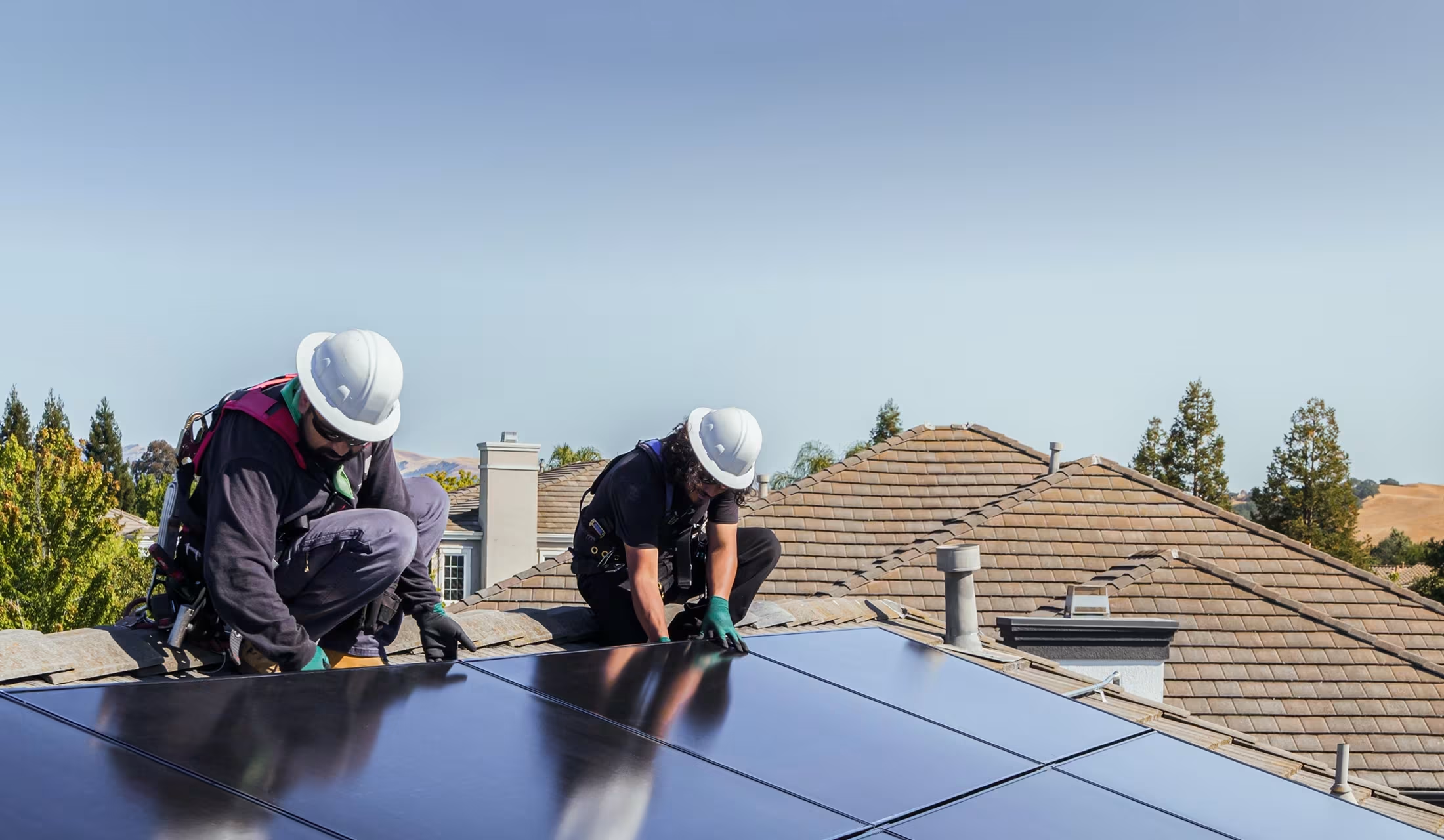
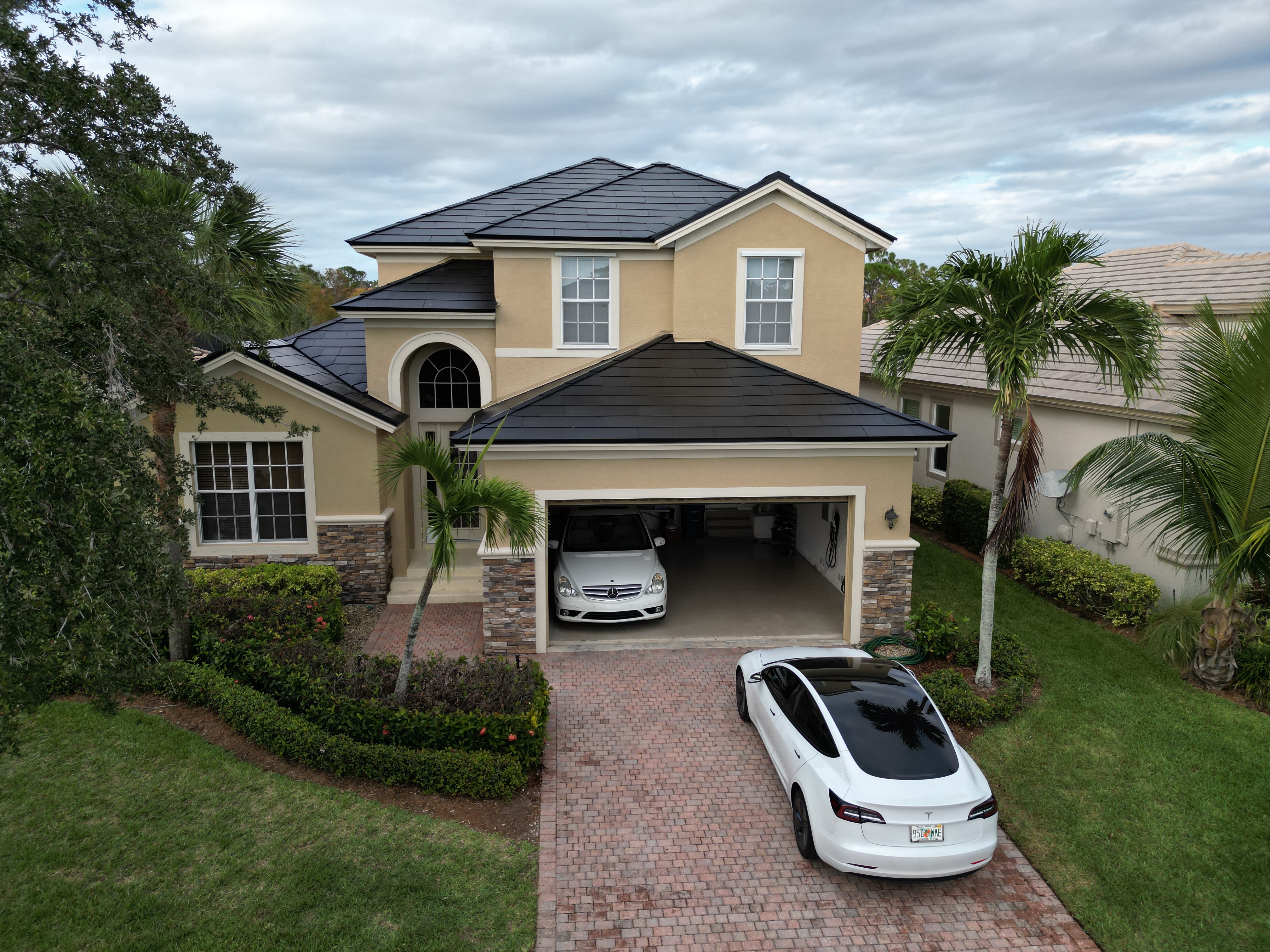
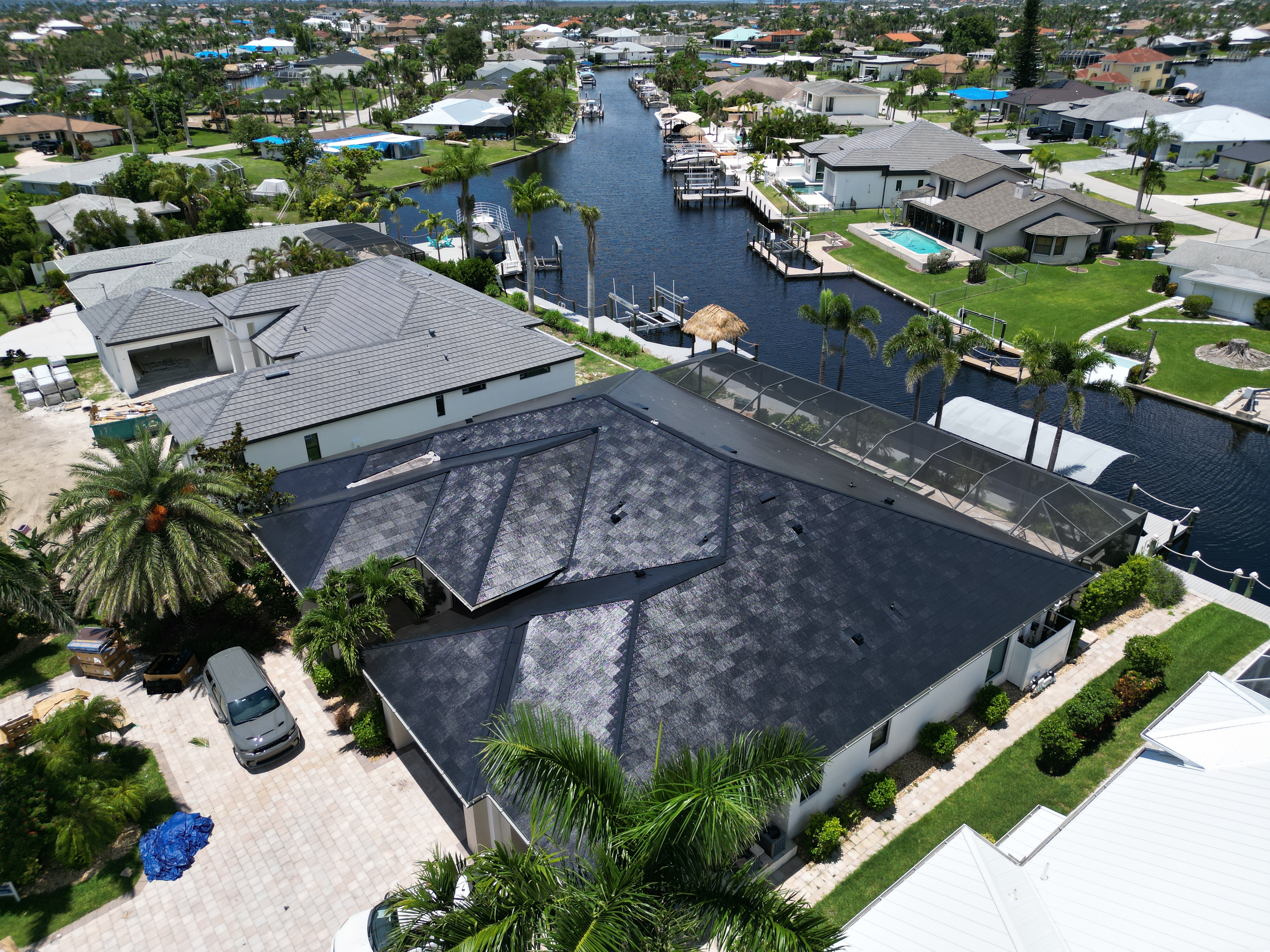
PrimeBid Energy LLC installs both rooftop solar panels and Tesla Solar Roof. A selection of recent installations, labeled by system.
What makes a Fort Myers panel job different
Four things that shape rooftop solar here, starting with the roof itself.
Remaining roof life is the first question, not the array size
This is the part of a panel quote that most affects what you actually pay, and it is usually left out. An array is expected to operate for decades on top of a covering with its own separate lifespan. If the roof beneath has five years left, replacing it later means removing the array and reinstalling it, which is a real cost nobody quoted. So the honest sequence is roof first, panels second. We assess the covering and the deck before we size anything, and if the answer is that the roof should be replaced first, we say so, even though it delays the job.
- The array outlives the covering, so remaining roof life sets the sequence
- Removing and reinstalling an array for a later re-roof is a real, uncounted cost
- Roof condition is assessed before the system is sized
Lee County stock now splits two ways, and they need opposite advice
The roof-replacement wave that followed Hurricane Ian left the Fort Myers area with two very different populations of house, and the right recommendation is close to opposite for each. A home whose roof was replaced in the last few years is near the ideal case for panels: a long, known service life underneath, a fresh deck, and no reinstall cost looming. A home whose roof came through and is now approaching end of life is the case where panels should wait for the re-roof, or where a covering that generates, rather than equipment mounted above one, is worth pricing against it. Which population you are in is a question about your address, and it changes the recommendation more than anything about the equipment does.
- A recently replaced roof is close to the ideal case for panels
- A roof near end of life is a reason to sequence the re-roof first
- The recommendation follows the roof, not the product we would rather sell
In a historic district, visible equipment is the harder conversation
Fort Myers has designated historic districts, including Dean Park since 1997, the Downtown Historic District and Edison Park, and the City operates a Historic Preservation Commission that hears Certificate of Review applications for exterior work. Panels are the harder case there than a solar covering is, because they are visible equipment added above the roofline rather than the roof surface itself. Florida Statutes §163.04 is what sets the boundaries: subsection (1) bars an ordinance from prohibiting solar collectors outright, and subsection (2) permits an approving entity to determine location only within an orientation to the south or within 45 degrees east or west of due south, and only where that determination does not impair effective operation. We design the array to that constraint from the start rather than submitting a layout that invites a refusal.
- Dean Park, the Downtown district and Edison Park are designated
- §163.04(1) bars ordinances that prohibit solar collectors
- §163.04(2) limits placement review to within 45 degrees of due south
A Fort Myers address does not name your utility
Lee County is served by more than one electric utility, and the Fort Myers area is exactly where that gets confusing. LCEC, a rural electric cooperative, lists its own address in North Fort Myers, while FPL serves other parts of the area. We will not guess it from a zip code, because the two are governed differently. FL Admin Code Rule 25-6.065 governs interconnection for investor-owned utilities and defines Tier 1 as 10 kW or less, where the utility may not require liability insurance. Cooperatives and municipal utilities sit outside that rule entirely and set their own credit terms, which changes what exported generation is worth and therefore how the system should be sized. We confirm the serving utility by address before any design assumption depends on it.
- More than one electric utility serves the Lee County area
- Rule 25-6.065 governs investor-owned utilities, Tier 1 at 10 kW or less
- Cooperatives set their own credit terms, which changes sizing
What goes on the roof, and what governs it
Specifications you can verify before signing. No upsell adjectives.
- System
- Roof-mounted photovoltaic array with inverter and monitoring. Panels mount above the existing covering rather than replacing it, which is the core difference from Tesla Solar Roof.
- Florida Product Approval
- Mounting and racking systems carry statewide Florida Product Approval on file at floridabuilding.org. Approval numbers go in the permit package and are verified per project.
- Attachment and penetrations
- Every roof penetration is a flashing detail on a covering that has to keep working. Attachment method is matched to the covering type and to the approval being filed, and it is quoted rather than assumed.
- Wind
- FBC 8th Edition (2023) Figure 1609.3(1) maps Lee County between the 150 mph and 160 mph ultimate design wind speed contours. Site-specific values come from the ASCE 7 Hazard Tool at design time.
- Wind-Borne Debris Region
- All of Lee County, Fort Myers included, sits inside the Wind-Borne Debris Region, covering areas mapped at 140 mph ultimate design wind speed or greater.
- Not HVHZ
- Lee County sits outside the High Velocity Hurricane Zone, which covers Miami-Dade and Broward only. Statewide Florida Product Approval applies rather than a Miami-Dade Notice of Acceptance.
- Interconnection tier
- Under FL Admin Code Rule 25-6.065, Tier 1 is a system of 10 kW or less, Tier 2 is greater than 10 kW up to 100 kW, Tier 3 is greater than 100 kW up to 2 MW. Most residential arrays are Tier 1. The rule binds investor-owned utilities; cooperatives set their own terms.
- Storage compatibility
- Pairs with Tesla Powerwall 3. Whole-home backup depends on panel and load configuration.
City of Fort Myers solar permitting, in plain English
What a rooftop PV submittal actually involves.
Roof, district, and utility check
Three answers before design: how much service life the existing covering has, whether the parcel sits in a designated historic district, and which electric utility actually serves it. Each one can change the project, and the first can pause it.
Structural and electrical review
Roof framing checked for the added load, deck condition assessed for attachment, and the electrical service reviewed for the interconnection point and any panel upgrade the array requires.
Historic Preservation Commission review, where it applies
Inside a designated district, the Certificate of Review application goes to the City's Commission. For panels we prepare a layout already designed to the placement limits §163.04 allows, so the submittal is defensible rather than aspirational. The Commission sets its own calendar, so this goes first.
City permit submittal
Building and electrical scope filed with City of Fort Myers Building, Permitting & Inspections at 1825 Hendry Street through the EnerGov Customer Self Service Portal, with Florida Product Approval numbers for the racking attached. Addresses outside city limits go to Lee County instead.
Utility interconnection application
Filed in parallel with the building permit once the serving utility is confirmed. If it is investor-owned, Rule 25-6.065 governs and most residential arrays sit in Tier 1 at 10 kW or less. If it is a cooperative, the process and credit terms are the cooperative's own.
Install, inspection, and energizing
Racking and flashing, array set, electrical tie-in, then City inspections at the structural and electrical milestones. The system energizes after final inspection and the utility meter exchange.
The City publishes no guaranteed review window, so this page does not quote one, and no timeline is quoted for the Historic Preservation Commission either. Rooftop solar in Fort Myers generally requires both a building permit and an electrical permit.
What Florida pays back, plainly
The 2026 position, including the part most competitor pages still get wrong.
Federal solar credit in 2026
The §25D Residential Clean Energy Credit ended for installs completed after December 31, 2025. A system bought outright in 2026 therefore returns nothing from that credit, and any page still advertising 30% for an owned system is out of date. In 2026 that 30% reaches a household only via a third-party-owned structure, where the system owner claims the commercial §48E credit and passes the value along. PrimeBid presents those paths as Midas My Incentives and Full Transfer at proposal. Ask your CPA which one fits your situation.
Florida sales-tax exemption
Solar energy systems are exempt from Florida state sales tax under FL Statutes §212.08(7)(hh).
Florida property-tax exemption
Under FL Statutes §193.624, the just value attributable to a qualifying renewable energy source device installed on residential property on or after January 1, 2013 is excluded in full from the assessed value. Adding solar does not raise the property tax on the home.
The re-roof underneath earns nothing
If your roof should be replaced before the array goes on, that roofing work carries no federal tax credit of its own. §25C never covered roofing and §25D was solar-only. It is worth budgeting as its own line rather than assuming the solar incentives reach it.
What your utility credits depends on which one you have
Rule 25-6.065 sets the interconnection framework for investor-owned utilities. Cooperatives and municipal utilities set their own credit terms. We do not quote a rate on this page for either. Confirm current terms with the utility that actually serves your address before you sign.
How PrimeBid Energy LLC handles rooftop solar in Fort Myers
One team, end to end. Roof assessment to energized.
A Fort Myers panel job touches the roof it sits on, structural framing, electrical, the City building department, sometimes a historic preservation commission, and a utility that has to be identified before the application is written. PrimeBid Energy LLC owns each of those stages all within one company, and is a Florida State Certified Roofing Contractor as well as an electrical contractor, which is why the roof question gets a straight answer here.
Free assessment, roof included
Measurement, shading study, electrical service review, and an honest read on the remaining life of the covering you would be mounting to.
Sequence recommended before design
If the roof should be replaced first, we say so and price both paths, including what a later re-roof would cost with an array already installed.
Design and proposal
Array layout, production estimate, equipment list, and total price, designed within the placement limits that apply where a district or association reviews exterior work.
City permit and utility interconnection
Fort Myers building and electrical permit through the EnerGov portal, and the interconnection application to whichever utility actually serves the parcel.
Install, then monitoring
Racking and flashing, array set, electrical tie-in, City inspections, utility meter exchange, then monitoring handoff.
Fort Myers solar panel questions
- Should I replace my roof before installing solar panels?
- Often yes, and it is the first thing we check. An array is expected to run for decades on top of a covering with its own separate lifespan. If the roof beneath has only a few years left, replacing it later means removing and reinstalling the array, a cost that is almost never in the original solar quote. We assess the covering and deck before sizing anything and tell you plainly if the answer is to sequence the roof first, even though that delays the job.
- My roof was replaced after Hurricane Ian. Does that help?
- It is close to the ideal case. A recently replaced roof means a long, known service life underneath the array, a sound deck to attach to, and no reinstall cost looming in the middle of the system's life. The roof-replacement wave across Lee County left a lot of homes in exactly that position, and for those owners the panel conversation is much simpler than it is for a house whose roof is nearing the end.
- Panels or a solar roof, if my roof needs replacing anyway?
- That is the moment the two are genuinely comparable, because you are already committed to the cost of a covering. Panels mount above a new roof, which means two systems installed at once and aging on separate schedules. Tesla Solar Roof replaces the covering, so the roof and the generation are one assembly. We install both and will price them side by side rather than steering you. If your roof has years left, panels are usually the straightforward answer.
- Can I put panels on a house in Dean Park or the Downtown district?
- It requires a review. The City operates a Historic Preservation Commission that hears Certificate of Review applications for exterior work in designated districts, and Dean Park has been one since 1997. Panels are the harder case in a district because they are visible equipment above the roofline. Florida Statutes §163.04(1) bars an ordinance from prohibiting solar collectors outright, and §163.04(2) allows an approving entity to determine placement only within an orientation to the south or within 45 degrees east or west of due south, and only where that does not impair effective operation. We design to that constraint from the outset.
- Am I on FPL or LCEC?
- That has to be checked against your address, and we will not guess it from a zip code. Lee County is served by more than one electric utility and the Fort Myers area is where the answer varies most. It matters because FL Admin Code Rule 25-6.065 governs interconnection for investor-owned utilities, defining Tier 1 as 10 kW or less with no liability insurance permitted to be required at that tier, while cooperatives and municipal utilities sit outside that rule and set their own credit terms. Since what surplus is worth affects how the array should be sized, we confirm the utility before design.
- How big a system should I install?
- That depends on your consumption and on what your utility does with exported generation, which is why we confirm the serving utility first. Where surplus banks at a favorable rate, sizing to annual usage is straightforward. Where it settles at a lower rate, matching production to what the house actually consumes matters more, and storage enters the conversation earlier. We show you the numbers for your roof and your bill rather than a generic offset percentage.
- Do I pull a Fort Myers permit or a Lee County permit?
- The City of Fort Myers runs its own Building, Permitting & Inspections department at 1825 Hendry Street, with submittals through its EnerGov Customer Self Service Portal. An address outside city limits goes to Lee County instead. Jurisdiction is confirmed by address before anything is filed. Rooftop solar generally requires both a building permit and an electrical permit.
Get a Fort Myers solar estimate.
Free assessment including an honest read on your roof, your serving utility confirmed by address, and any historic district review mapped before you sign. PrimeBid Energy LLC, Tesla Premier Certified Installer.