
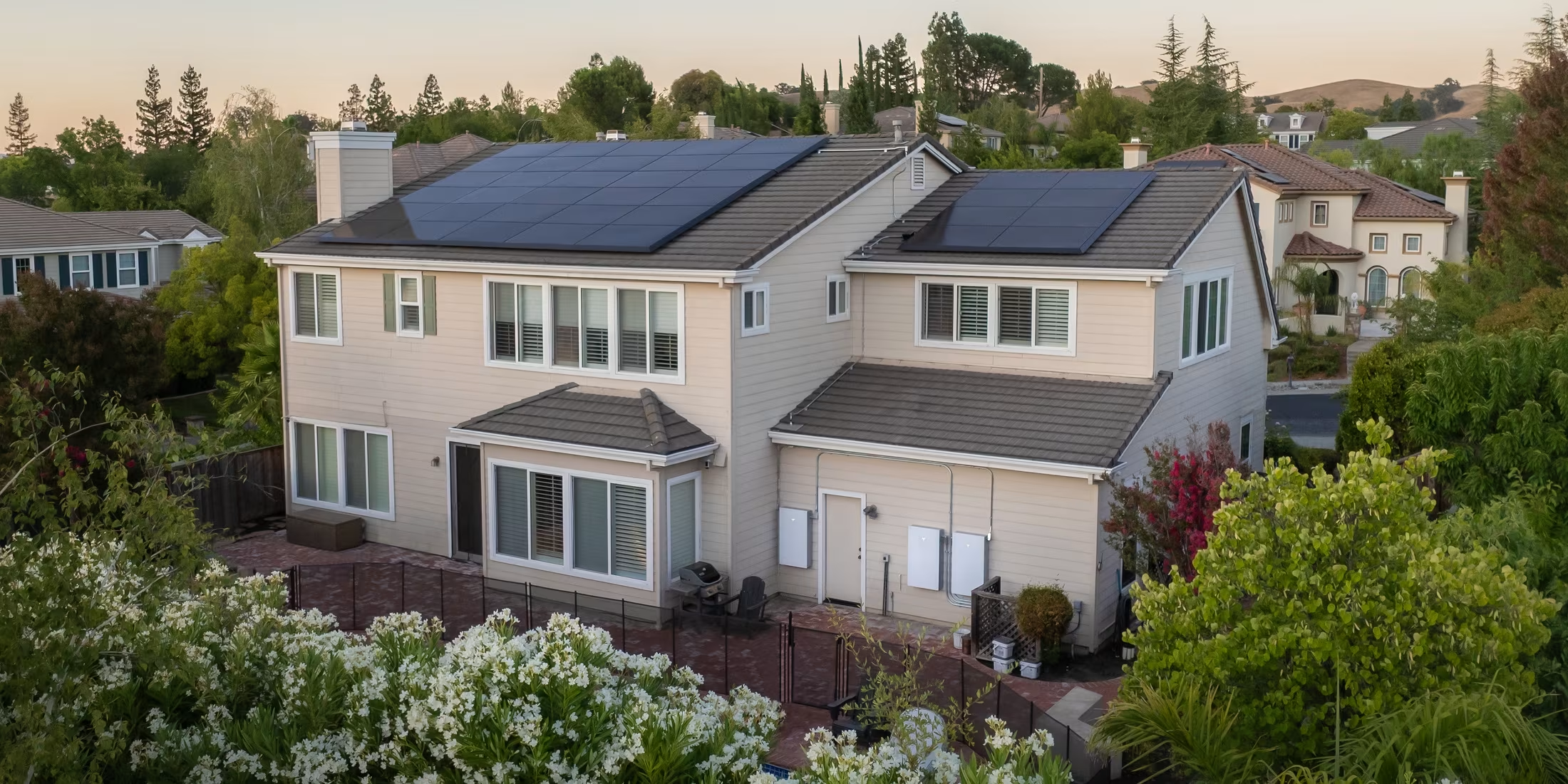
Rooftop Solar Panels · Port Charlotte, FL
Solar panels, sized for Port Charlotte.
Rooftop photovoltaic systems designed, permitted, and installed across Charlotte County by PrimeBid Energy LLC.
Local
Southwest Florida based, serving Port Charlotte across Charlotte County
Single team
Design, roofing interface, electrical, permitting all within one company
Interconnection
FPL net metering handled for you
Manufacturer warranty
Module and inverter warranties per the equipment specified
Port Charlotte has no city hall of its own. It is unincorporated Charlotte County, platted starting in the 1950s by General Development Corporation on a grid of dredged canals, and every solar permit here runs through the county's own Building Construction Services rather than a city building department. FPL is the interconnecting utility countywide. PrimeBid Energy LLC handles the design, permit, install, and utility interconnection for a rooftop solar panel system, sized to your annual usage rather than to fill the roof.
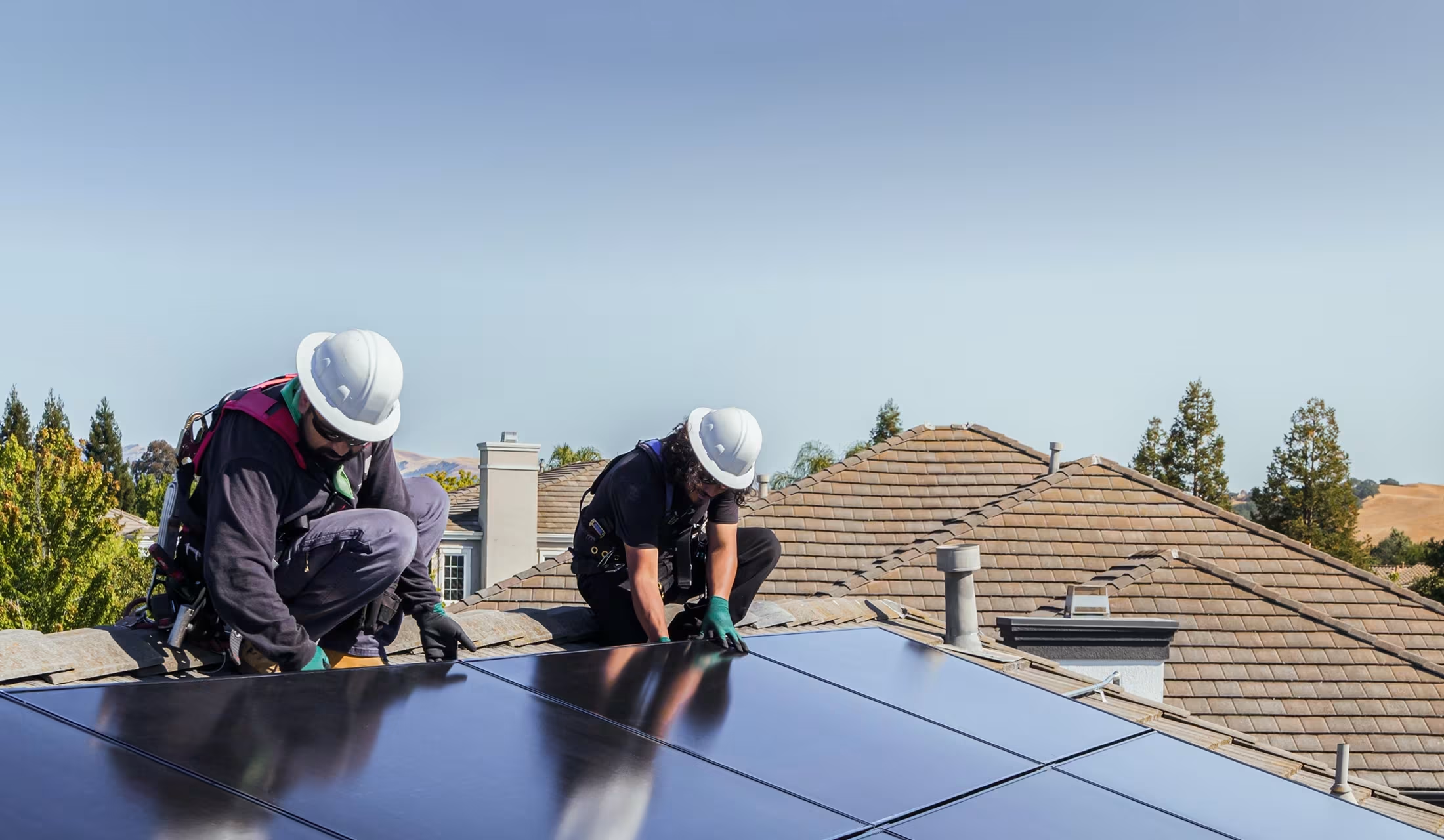
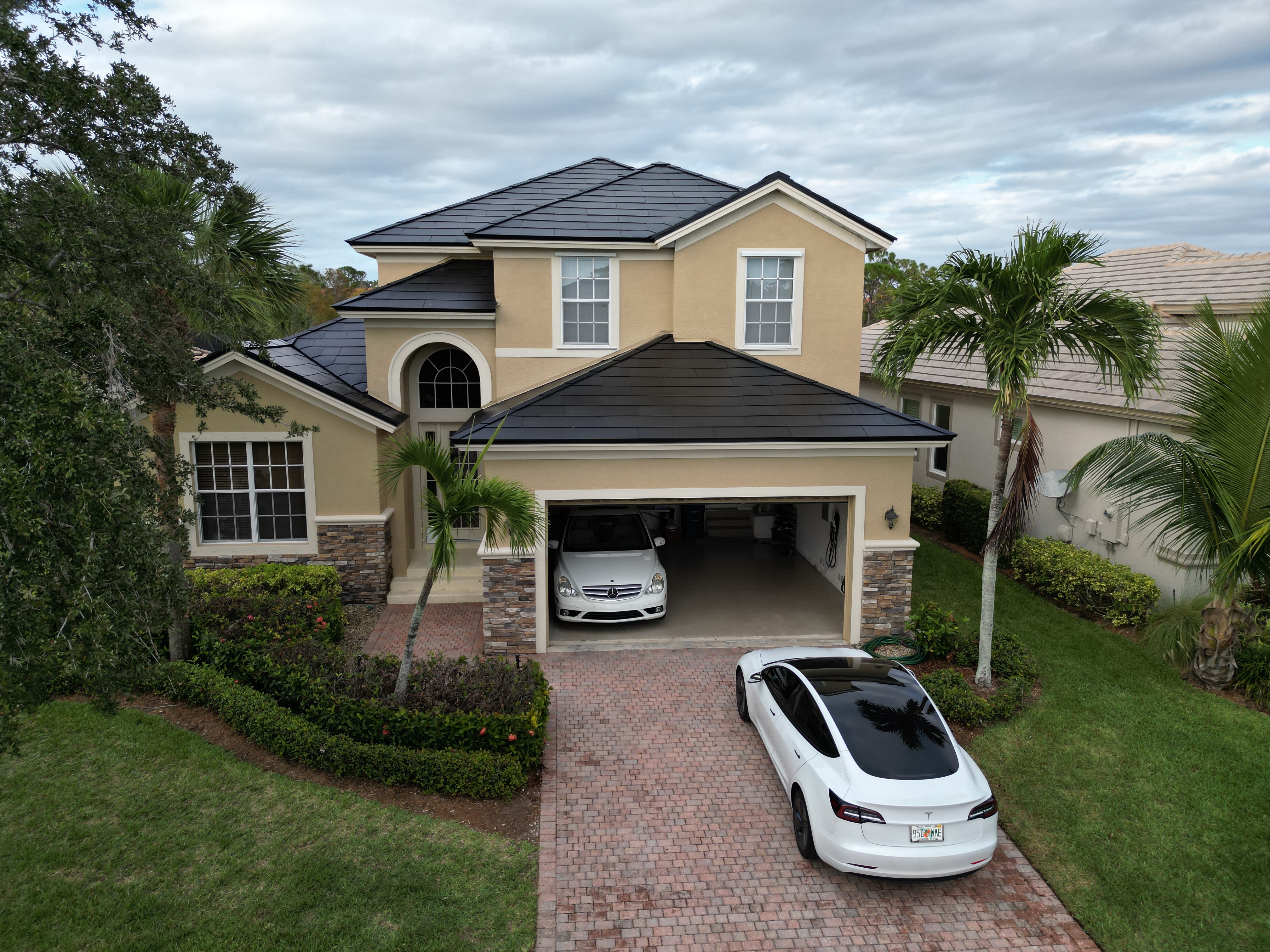
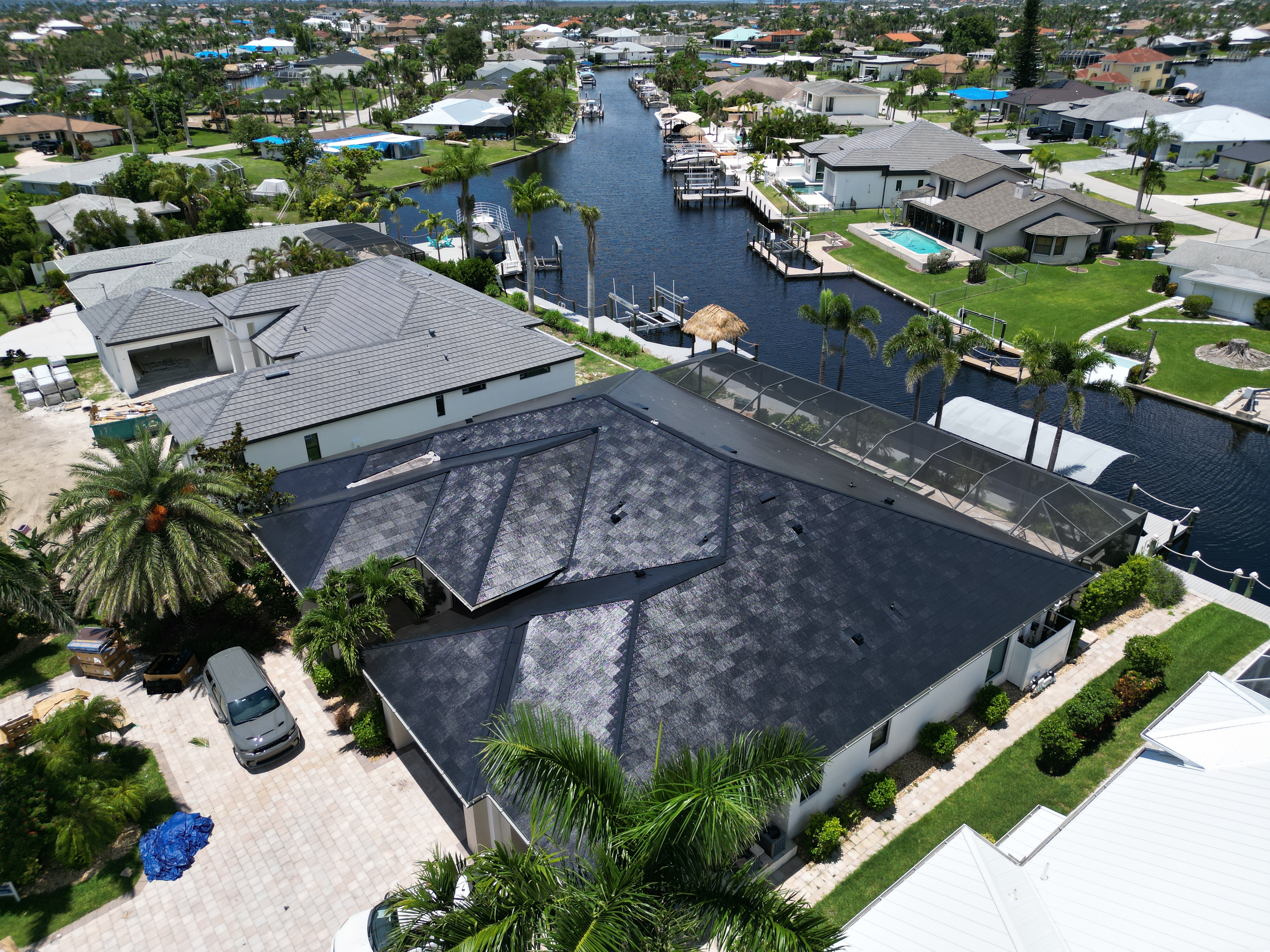
Recent work
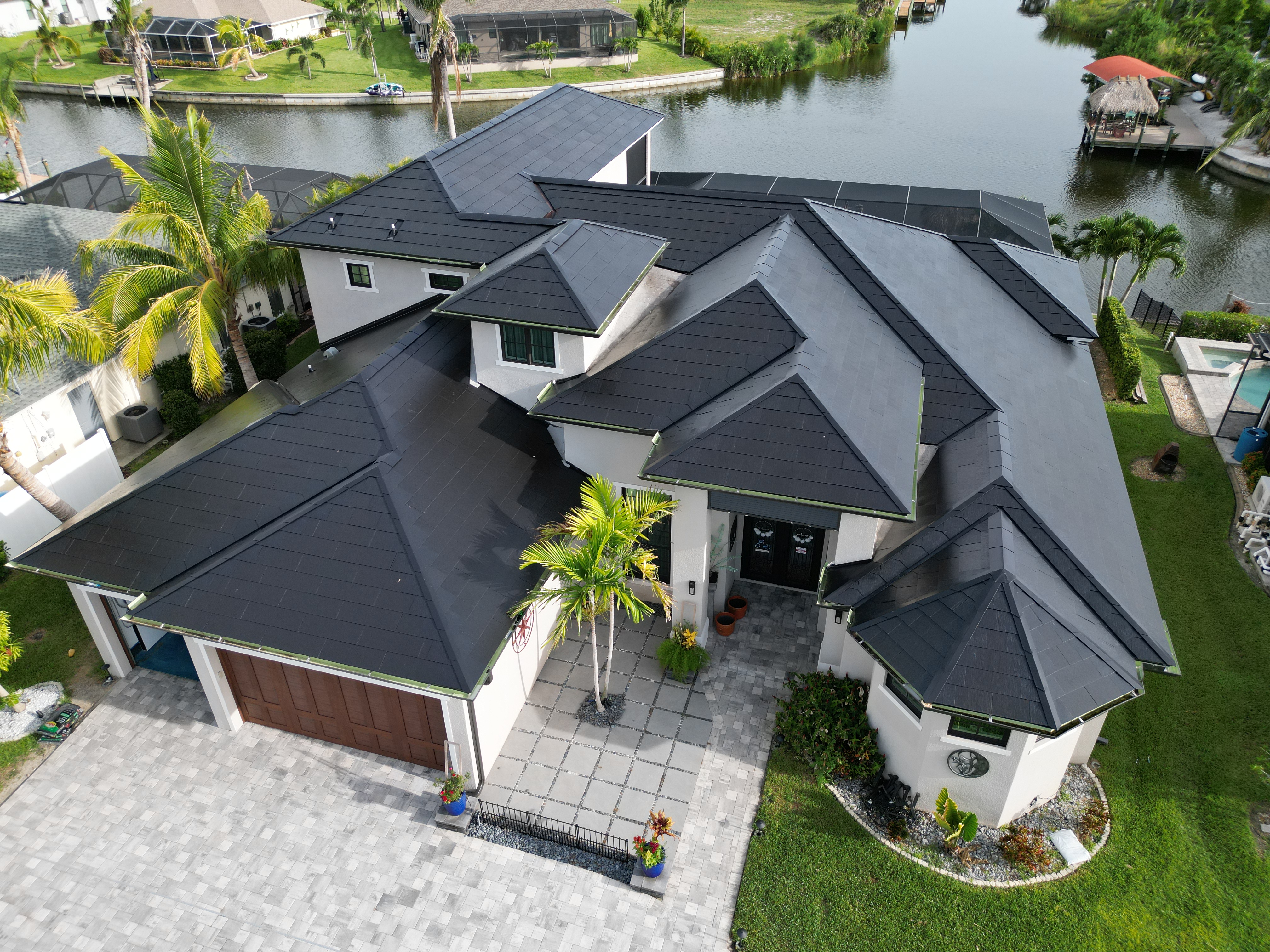
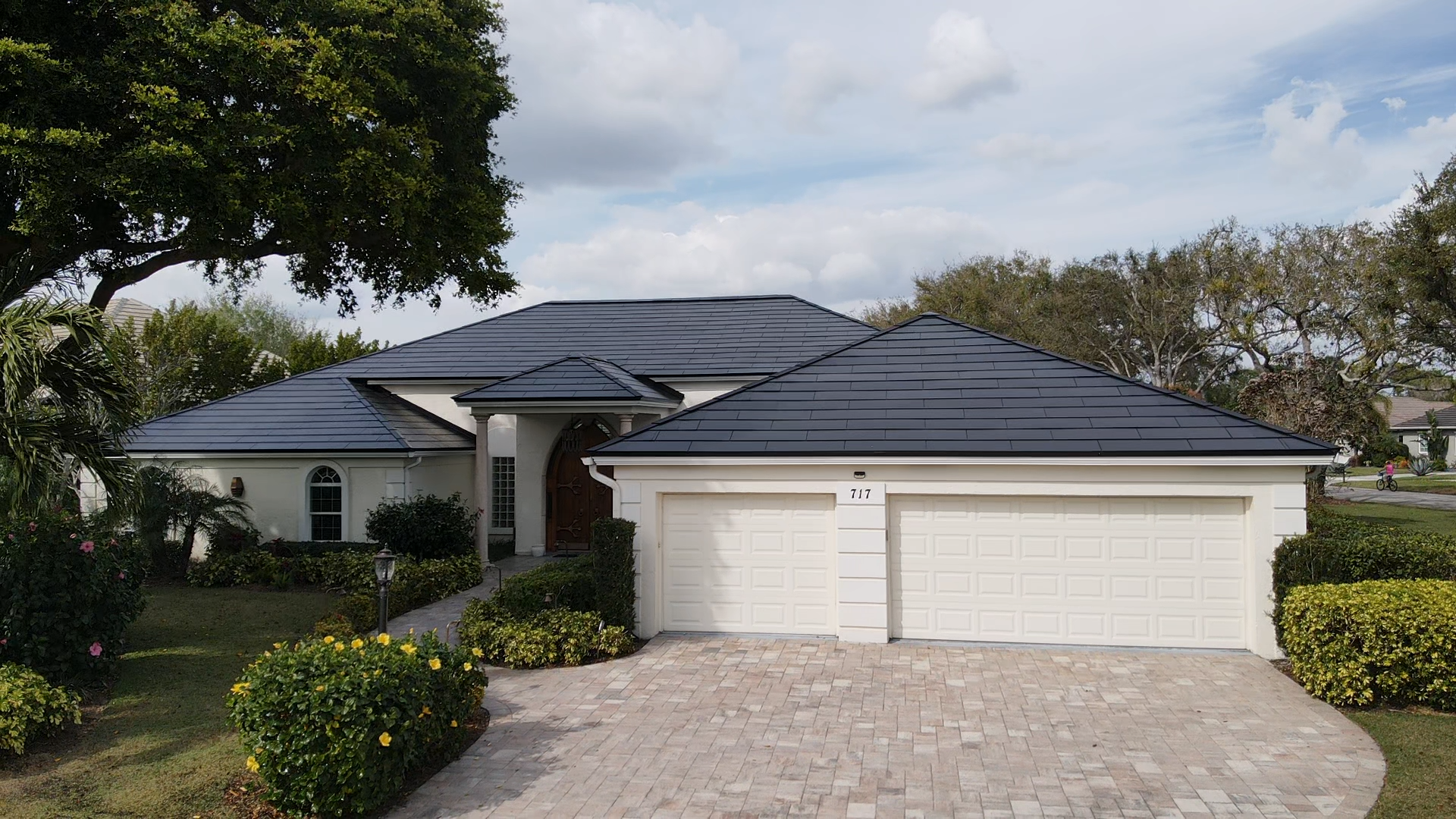
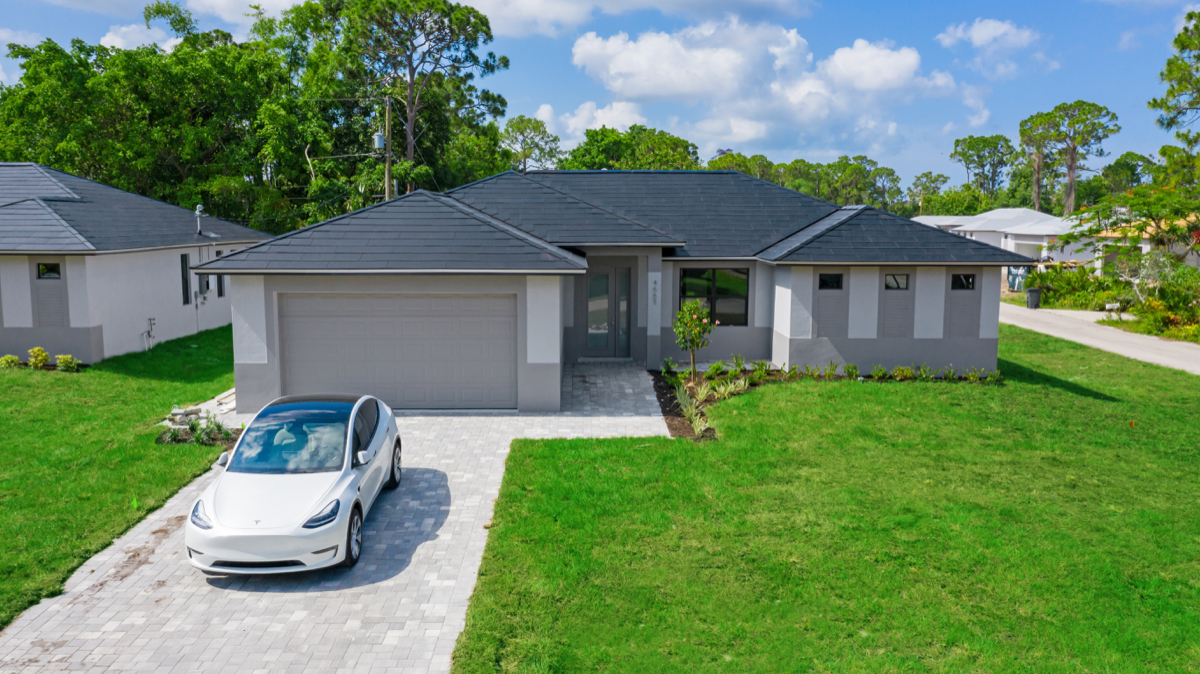
Our solar work across Southwest Florida
PrimeBid Energy LLC installs both rooftop solar panels and Tesla Solar Roof. A selection of recent installations, labeled by system.
Why rooftop solar works in Port Charlotte
Three factors that shape how a rooftop PV system performs in unincorporated Charlotte County.
No city hall, one county permit office
Port Charlotte never incorporated as its own city, so every address here, unlike Punta Gorda across the Peace River, files through Charlotte County Building Construction Services rather than a city building department. That means one process and one portal, Accela Citizen Access, for the whole community rather than city-versus-county confusion.
- Port Charlotte is unincorporated Charlotte County, with no separate city permit office
- Charlotte County Building Construction Services handles every Port Charlotte solar permit
- Applications and plan review run through the county Accela Citizen Access portal
A canal-grid community built for roof access
General Development Corporation platted Port Charlotte on a rigid street grid threaded with hundreds of miles of dredged canals starting in the 1950s, and most lots were laid out with a similar orientation and lot depth. That regularity, plus Southwest Florida's average of over 240 sunny days a year, makes production modeling on a Port Charlotte roof relatively consistent street to street compared with older, less uniform subdivisions.
- Platted lot grid gives fairly consistent roof orientation and pitch across the community
- Florida among the highest peak-sun-hour totals in the US
- Sized to annual usage, not to fill the roof
A county that already rebuilt to a harder standard
Hurricane Ian tore part of the roof off HCA Florida Fawcett Hospital in Port Charlotte as the Category 4 storm moved inland from its Cayo Costa landfall on September 28, 2022, and much of the county's current roof stock and racking-attachment scrutiny dates to the rebuild that followed. FPL is the interconnecting utility for net metering across all of Charlotte County.
- Hurricane Ian caused significant wind damage across Charlotte County, including Port Charlotte, in 2022
- FPL is the utility for net metering across Charlotte County, including Port Charlotte
- Racking Florida Product Approval (FL#) verified per project
What a rooftop PV system actually is
Specifications you can verify before signing. No upsell adjectives.
- Product
- Rooftop photovoltaic (PV) system. Solar modules on engineered racking over your roof, wired to string or microinverters per design.
- Warranty
- Manufacturer module and inverter warranties per the equipment specified in your proposal. Warranty terms come from the module and inverter manufacturers and are listed with the equipment on the proposal.
- Wind and attachment
- Racking and roof attachments engineered to Florida Building Code wind load for the site. Florida Product Approval (FL#) for the racking system is verified per project at permit submittal.
- Wind-load region
- Charlotte County is outside the High-Velocity Hurricane Zone (Miami-Dade and Broward only). Attachment engineering follows the applicable FBC edition for the site.
- Roof interface
- Panels mount over a sound roof. If the roof is near end of life, re-roof-before-solar sequencing is reviewed per project so the array is not set on a roof due for replacement.
- Modeled production
- Modeled annual output runs roughly 1,450 to 1,600 kWh per kW installed at about 5.2 to 5.6 peak sun hours per day. These are modeled ranges, re-run for your exact address and roof, not a guaranteed figure.
- Storage compatibility
- Pairs with battery storage, including Tesla Powerwall, for backup during outages. Whole-home backup depends on panel and load configuration.
Port Charlotte solar permitting, in plain English
What the timeline actually looks like for a rooftop solar permit in unincorporated Charlotte County.
Site survey + design
On-site measurement, electrical service review, and a roof condition check. Design prepared with racking Florida Product Approval attached.
Charlotte County permit submittal
Solar and electrical scope filed with Charlotte County Building Construction Services through the county Accela Citizen Access portal. There is no separate Port Charlotte city permit process. The county handles the whole unincorporated area.
FPL interconnection application
Net metering application filed with FPL in parallel with the permit. Florida net metering is governed by FL PSC Rule 25-6.065.
Install
Racking and modules installed and tied into the electrical service. Third-party inspections at structural and electrical milestones. HB 683 allows private-provider and virtual inspection.
PTO (Permission to Operate)
After final inspection and the FPL bi-directional meter, the system is energized. From energization the array produces against your utility bill.
Since July 1, 2025, HB 683 (Chapter 2025-140) requires a local government to issue a single-trade solar and storage permit within five business days of a qualifying private-provider inspection affidavit, with next-business-day auto-approval if the deadline is missed. SolarAPP+ instant permitting is not live in Charlotte County yet, so the county still issues permits through its own Accela portal. Review windows are approximate and depend on office workload.
What Florida pays back, plainly
The math that actually moves on rooftop solar in Port Charlotte.
Federal incentive value
The federal §25D residential credit ended for systems completed after December 31, 2025, so a system purchased outright in 2026 gets nothing from §25D. In 2026 the 30% federal value reaches a homeowner only through a third-party-owned structure whose owner claims the §48E commercial credit. PrimeBid presents these paths as My Incentives and Full Transfer at proposal. Talk to your CPA on whether either path fits your situation.
Florida sales-tax exemption
Solar energy systems and components are exempt from Florida state sales tax under FL Statutes §212.08(7)(hh), with no expiration.
Florida property-tax exemption
The added home value from a qualifying residential renewable energy device is excluded from property tax under FL Statutes §193.624 and §196.182 for devices installed on or after January 1, 2013.
Net metering
Florida residential net metering is governed by FL Statute §366.91 and FL PSC Rule 25-6.065. Monthly surplus is credited at the utility's retail rate. Any December year-end surplus is trued up at a lower rate, FPL's COG-1 average annual generation cost, so systems are sized to annual usage rather than larger.
No state income tax
Florida has no state income tax, so any utility-bill savings drop straight to the household budget.
How PrimeBid Energy LLC handles solar in Port Charlotte
One team, end to end. Design to PTO.
A rooftop PV install touches roofing, electrical, structural, and the utility. PrimeBid Energy LLC owns each of those stages all within one company so the handoffs do not fail at the seams.
Free site assessment
On-site measurement, shading study, electrical service and roof condition review.
Design + proposal
Array layout, modeled production range, equipment list, incentive paths, total price. No per-square-foot pricing on customer-facing proposals.
Permits + interconnection
Charlotte County Building Construction Services permit through Accela Citizen Access, plus FPL interconnection, filed in parallel.
Install
Racking and module install, electrical tie-in. Third-party inspections at structural and electrical milestones. HB 683 allows private-provider and virtual inspection.
PTO + monitoring
FPL bi-directional meter, system energized, monitoring app handoff for production tracking.
Port Charlotte solar panel questions
- Is there still a 30% federal tax credit for solar in Port Charlotte in 2026?
- Not for a system you buy yourself. The §25D residential credit ended for installs completed after December 31, 2025, so a system you purchase in 2026 gets nothing from §25D. In 2026 the 30% federal value can reach a homeowner only through a third-party-owned structure where the owner claims the §48E commercial credit. PrimeBid presents these paths as My Incentives and Full Transfer at proposal. Talk to your CPA on which path fits your situation.
- Who issues my solar permit if Port Charlotte is not a city?
- Charlotte County Building Construction Services. Port Charlotte has never incorporated, so it has no city building department of its own. Every permit, including solar, is filed with the county through its Accela Citizen Access portal, the same office that handles unincorporated Charlotte County generally.
- Do I pay sales tax on solar panels in Florida?
- No. Florida exempts solar energy systems and their components from state sales tax under FL Statutes §212.08(7)(hh), and that exemption has no expiration.
- Will solar panels raise my property taxes in Charlotte County?
- No. The added home value from a qualifying residential renewable energy device is excluded from property tax under FL Statutes §193.624 and §196.182 for devices installed on or after January 1, 2013. Your home is worth more, but the solar value is not added to the taxable assessment.
- Who is my electric utility for solar in Port Charlotte?
- FPL. Florida Power & Light is the electric utility across all of Charlotte County, including Port Charlotte and Punta Gorda, so it is also the interconnecting utility for net metering here.
- Does net metering pay full price for my extra power?
- Monthly surplus is credited at the utility's retail rate under FL PSC Rule 25-6.065. Any December year-end surplus is trued up at a lower rate, FPL's COG-1 average annual generation cost, so building an oversized system does not pay back at retail. That is why systems are sized to your annual usage rather than larger.
Get a Port Charlotte solar panel estimate.
Free site assessment. Real modeled production numbers for your roof and address. No per-square-foot pricing games. PrimeBid Energy LLC, Charlotte County solar installer.